
Scientists at the U.S. Maritime Research Laboratory's (NRL) Chemistry Division have built up a more secure contrasting option to flame inclined lithium-particle batteries, which were as of late prohibited for a few applications on Navy ships and other military operations.
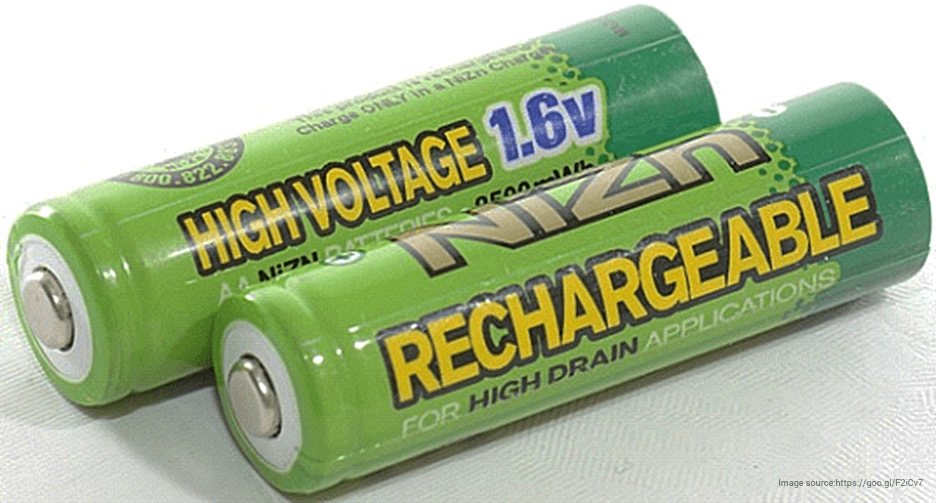
Jeffrey Long, Joseph Parker and Debra Rolison from NRL's are driving a push to make a whole group of more secure, water-based, zinc batteries. They have exhibited an achievement for nickel-zinc (Ni-Zn) batteries in which a three-dimensional (3-D) Zn "wipe" replaces the powdered zinc anode customarily utilized. With 3-D Zn, the battery gives a vitality substance and rechargeability that adversary lithium-particle batteries while maintaining a strategic distance from the security issues that keep on plaguing lithium.
"Our group at the NRL spearheaded the design way to deal with the update of terminals for cutting edge energy storage" said Dr. Rolison, senior researcher and vital examiner of this venture. "The 3-D sponge shape consider enables us to reposition zinc, a notable battery material, for the 21st century."
Zinc-based batteries are the go-to worldwide battery for single-utilize applications, yet they are not viewed as rechargeable ones because of their tendency to develop conductive hairs (dendrites) inside the battery, which can become sufficiently long to make short circuits common occurrence in them.
"The way to acknowledging rechargeable zinc-based batteries lies in controlling the conduct of the zinc amid cycling," said Parker, lead creator on the paper. "Electric streams are all the more consistently appropriated inside the sponge structure, making it physically tough to form dendrites."
Amazon Shutdown It's Underground Actually Free Program: http://www.eboggler.com/technology/amazon-shuts-down-its-underground-actually-free-program
The NRL group exhibited Ni-3-D Zn execution in three ways: expanding lifetime in single-utilize cells; cycling cells more than 100 times at a vitality content focused with lithium-particle batteries; and cycling cells more than 50,000 times in short instant cycles with irregular power blasts, like how batteries are utilized as a part of some hybrid models.
With the advantages of rechargeability, the 3-D Zn wipe is prepared to be sent inside the whole group of Zn-based soluble batteries over the common people and military sectors.
"We can now offer a vitality pertinent option, from drop-in substitutes for lithium-particle to new open doors in versatile and wearable power, and kept an eye on and unmanned electric vehicles," said Dr. Long, "while diminishing security dangers, facilitating transportation confinements, and utilizing abundant materials."
What are your views upon this new type of non flammable battery ? Let us know in the comments below.